Watch the Movie
A fully animated 4 minute 40 second film, with narration, an original score, and environmental sound.
The Story
The copper twilight above the clouds had taught the Velari to read pressure as other peoples might read ink. Then Orra began writing a sentence no one understood.
Aureline Shelf stood above a chalk-white ocean of cloud, a plateau of rust-colored stone and permanent copper twilight. Its people, the Velari, were low six-legged beings with indigo hides, delicate cheek fans, and bright pressure pearls braided along their harnesses. They did not build cities in one place. They traveled with them.
Kestrel Loom was one such settlement: a web of ceramic dwellings, reed bridges, nurseries, workshops, and markets carried beneath Orra, an elder sail-tree. Orra walked on six vast braided roots. High above, a translucent amber membrane gathered moisture from the fog and fed an orchard growing across her moving crown. For generations, she had followed the same migration lane across the Shelf.
Iri, the settlement's youngest route-reader, knew every familiar tremor in Orra's gait. One evening she felt something impossible beneath her feet. Orra had turned upwind—away from water, away from shelter, and away from the ancient route carved into every Velari wind map.
The council called it confusion. Tovan, Kestrel Loom's elder engineer, called it age. But when a second sail-tree on the far horizon made the same forbidden turn, Iri wondered whether the trees were not wandering at all. Perhaps they had sensed a truth that had not yet reached the Velari.
Orra's new path pulled the Rootprint Market across uneven stone. Bridges twisted, ceramic joints screamed, and counterweights swung hard enough to crack the market floor. Tovan and Iri released one of the great weights before it could drag three homes into the fog below. The settlement survived, but every released cable made retreat more difficult.
At the plateau's edge, Iri found an upward-flowing fog cataract. It carried cobalt mineral dust from somewhere beneath the cloud ocean. The dust glittered inside Orra's wind-sensing pores, clogging the same organs the Velari trusted to guide them. It seemed to prove the council right: Orra's senses had failed.
But Iri noticed the dust did not settle randomly. It clung in narrow spirals, like a warning traced around every pore. Orra was not blind. She was carrying evidence.
Iri brought the dust to Melu, the nursery tender. Together they released a flock of seed kites—thin membranes designed to reveal invisible pressure currents. The kites rose, circled once, and twisted into a falling helix. Their pattern predicted a catastrophic pressure collapse directly across the old migration lane.
Orra had turned before any Velari instrument could detect it.
The only surviving route led through Needle Pass, a cleft too narrow for Kestrel Loom's full web of bridges. Tovan climbed to the oldest span, placed his mouth palps against its ceramic brace, and listened to the strain singing through it. Then he cut the release. The bridge fell into the white abyss, taking empty storerooms and a lifetime of careful repairs with it. Orra folded her amber sail and entered the pass.
Beyond the stone needles, the air changed. Cyan fog welled from a new spring in the rock, and blue cup moss opened wherever its droplets landed. It was clean water, rich in the minerals Orra's orchard needed. The elder tree had not merely fled disaster. She had found the settlement's next home.
Orra planted all six roots around the spring and raised her membrane over Kestrel Loom like a sheltering wing. Far behind them, the horizon darkened. The pressure collapse struck the old lane, scouring its bridges and route markers into the cloud ocean. No one in the settlement spoke while the shock wave passed harmlessly over Orra's crown.
The next morning, Iri set a cobalt anchor into the new stone. With Tovan and Melu, she rebuilt the nursery bridge—not rigid like the old spans, but flexible enough to move when Orra moved. On the revised wind map, Iri did not draw the sail-tree as cargo, livestock, or landscape. She marked Orra as a route-reader.
The orchard had turned upwind because it understood danger before its passengers had words for it. The Velari survived because, for one uncertain night, they trusted an intelligence whose reasons they could not yet read.
Nine Chapters of Aureline Shelf
The original image sequence that established the world and shaped the movie.
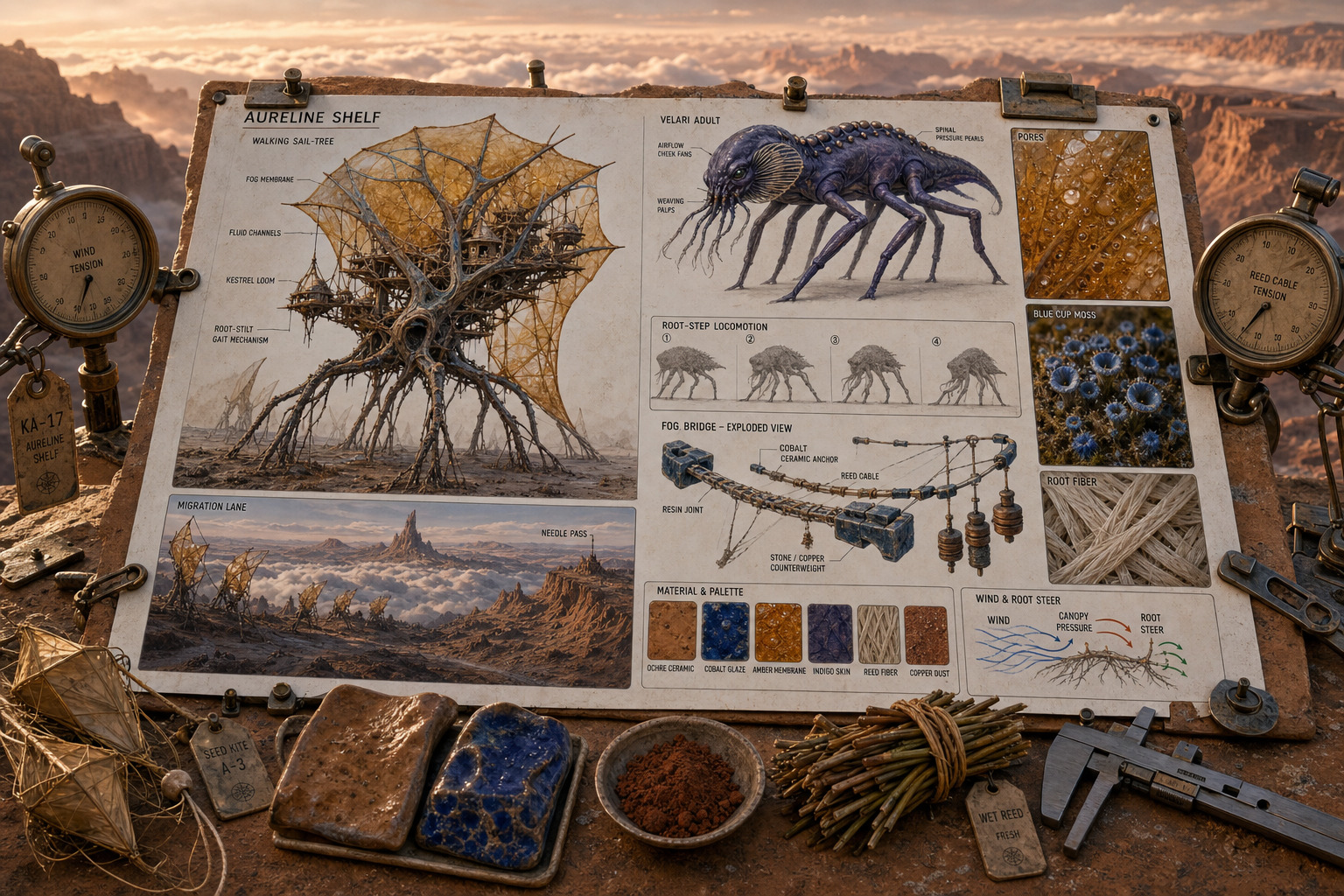 1. Field Chart
The copper plateau, the Velari, and the anatomy of a walking sail-tree.
1. Field Chart
The copper plateau, the Velari, and the anatomy of a walking sail-tree.
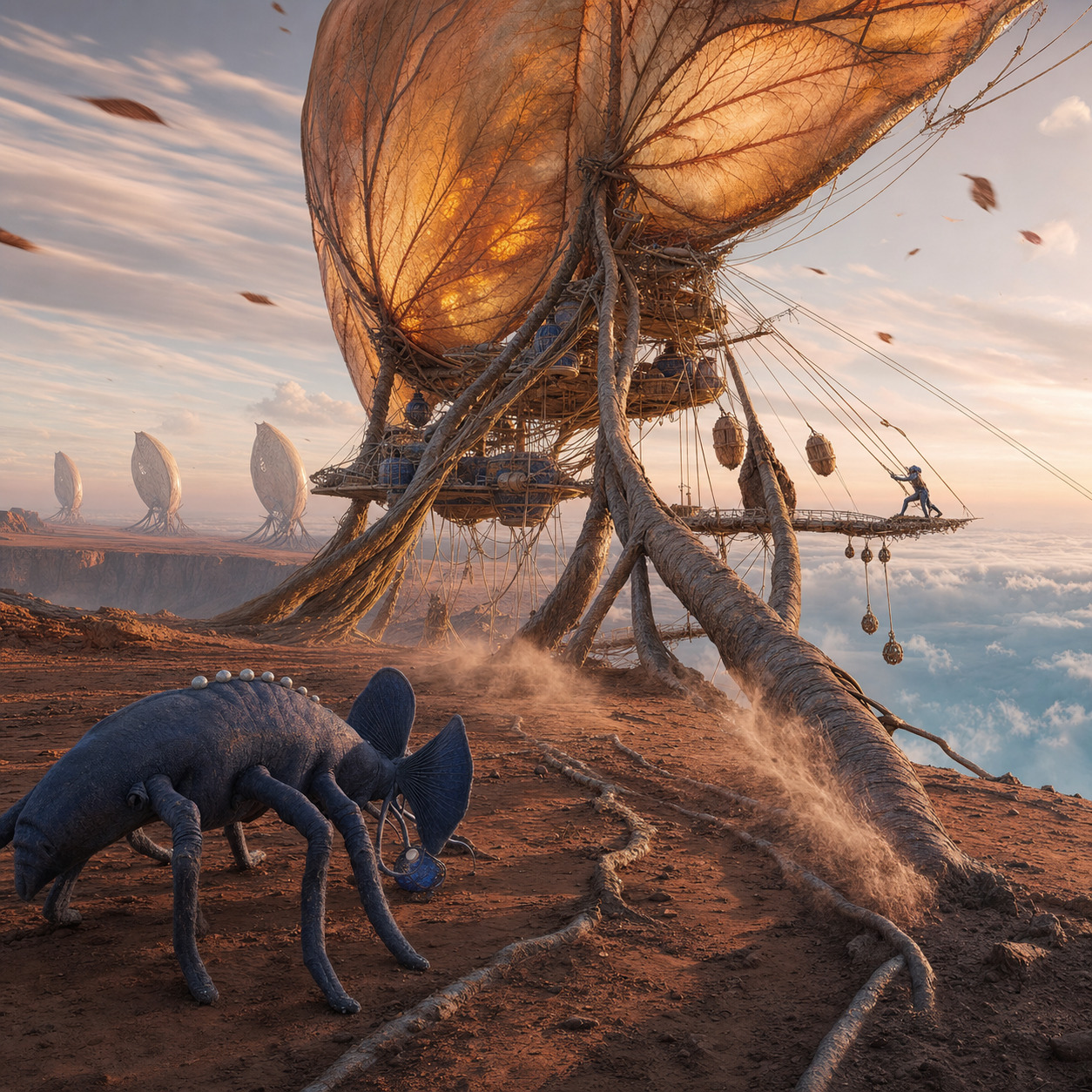 2. Orra Turns
Iri feels the elder sail-tree abandon the migration lane.
2. Orra Turns
Iri feels the elder sail-tree abandon the migration lane.
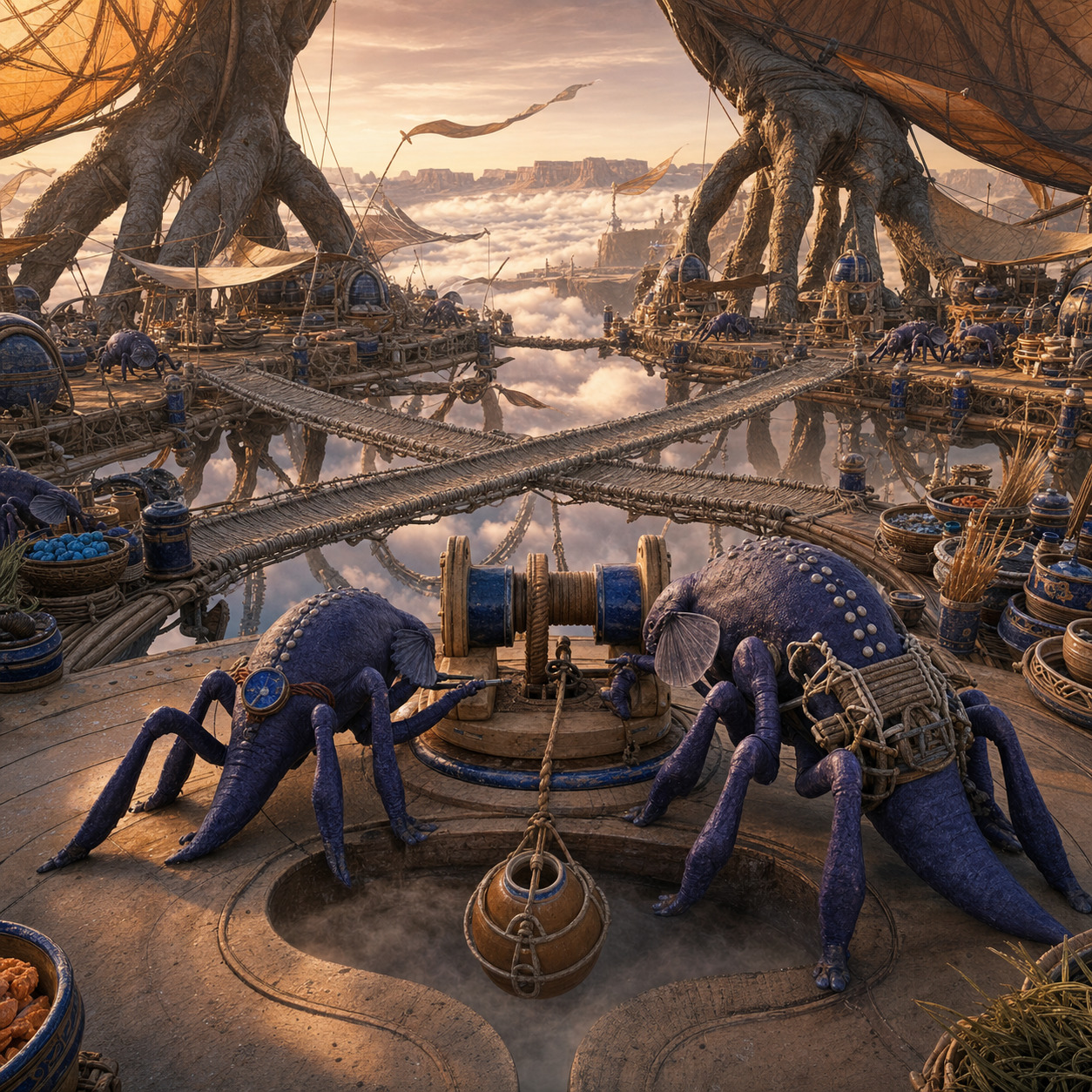 3. The Market Strains
Iri and Tovan release a counterweight before the settlement tears apart.
3. The Market Strains
Iri and Tovan release a counterweight before the settlement tears apart.
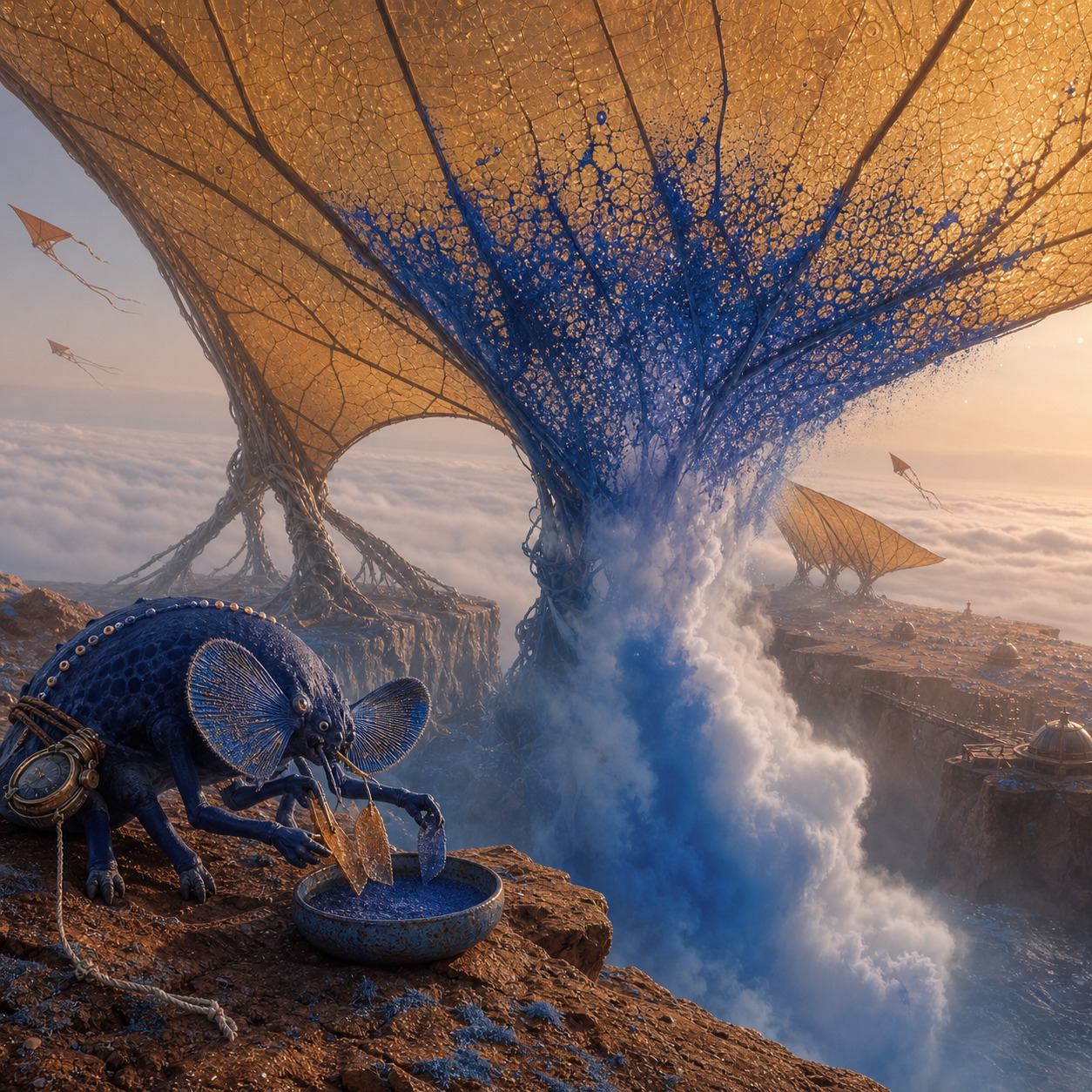 4. Cobalt Dust
An upward fog cataract carries strange mineral dust into Orra's sensory pores.
4. Cobalt Dust
An upward fog cataract carries strange mineral dust into Orra's sensory pores.
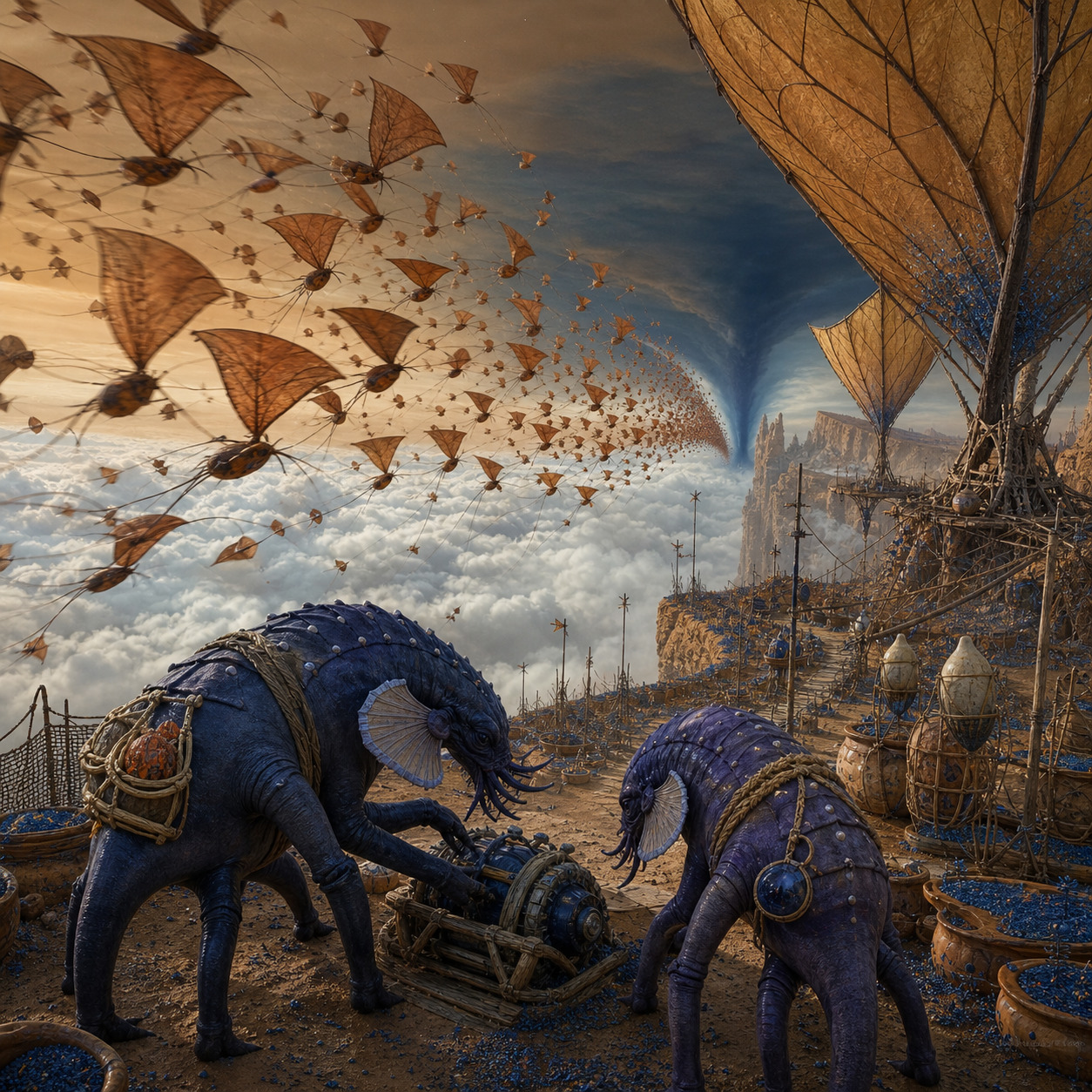 5. The Seed Kites
Iri and Melu make the invisible pressure collapse visible.
5. The Seed Kites
Iri and Melu make the invisible pressure collapse visible.
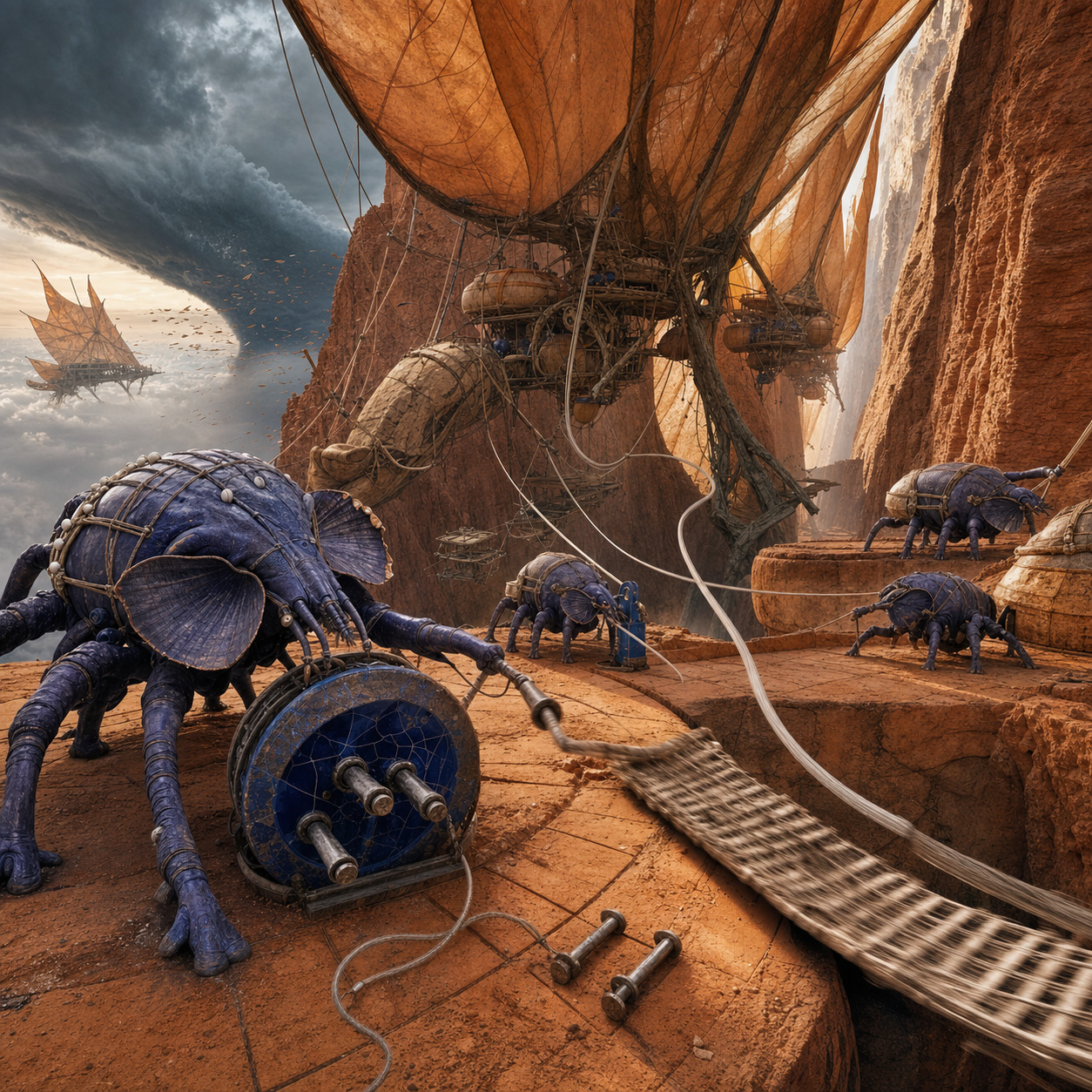 6. Needle Pass
Tovan sacrifices a bridge so the settlement can fit through the stone cleft.
6. Needle Pass
Tovan sacrifices a bridge so the settlement can fit through the stone cleft.
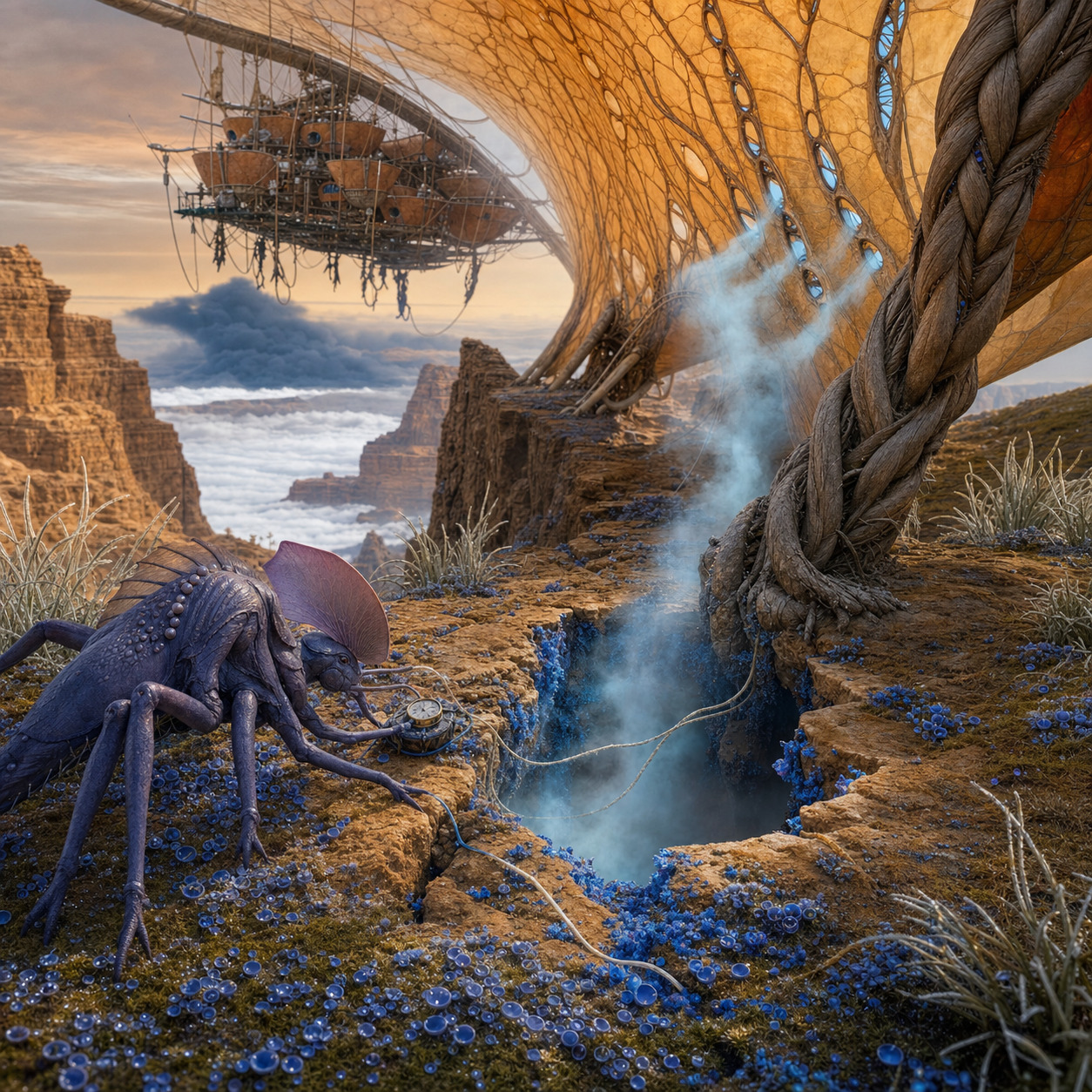 7. The Cyan Spring
Beyond the pass, Iri finds the destination Orra sensed before them.
7. The Cyan Spring
Beyond the pass, Iri finds the destination Orra sensed before them.
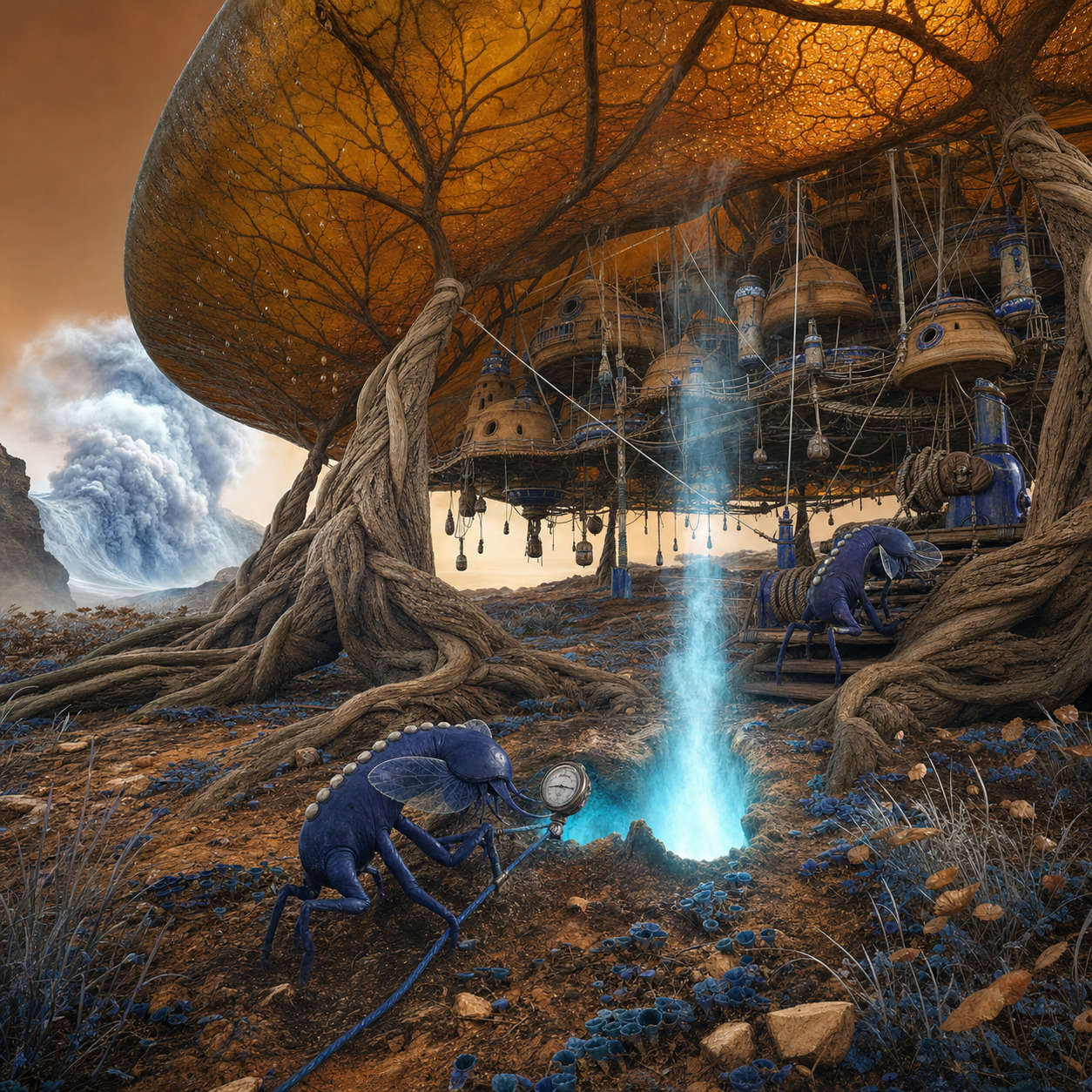 8. Orra Anchors
The sail-tree shelters Kestrel Loom while the old route is destroyed.
8. Orra Anchors
The sail-tree shelters Kestrel Loom while the old route is destroyed.
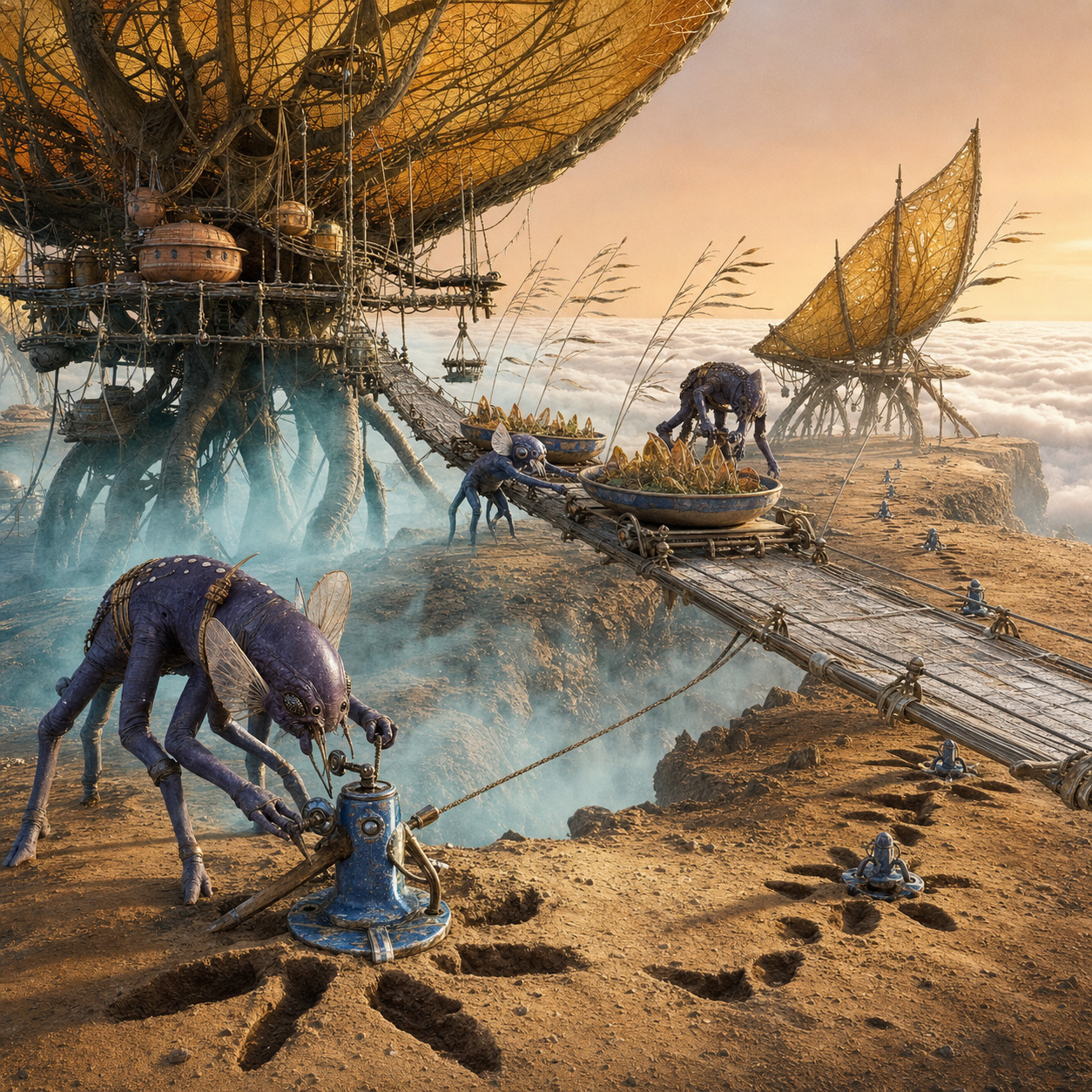 9. The Revised Map
Iri rebuilds for movement and recognizes Orra as a fellow route-reader.
9. The Revised Map
Iri rebuilds for movement and recognizes Orra as a fellow route-reader.